I grew up on a farm in Venezuela. The part I remember most is called las rubieras — a stretch of land that stays impossibly green through the dry season, a testament to my dad's ingenuity. I didn't know then that I'd name a pottery studio after it, or that I'd spend most of my adult life trying to understand why people reach for metaphors when plain language would do just fine.
I studied electrical engineering at Universidad Simón Bolívar, which says something about the path I was on at twenty. Circuits and systems challenged me, but they never really captured my imagination. Coding did. Little did I know that after a 20-year hiatus, my professional life would bring me back to that early interest.
I wandered quite a bit, though. I moved to the United States and started teaching Spanish, first in rural Illinois and eventually at UW–Madison. Language stopped being something I used and became something I studied. I started my PhD in linguistics in my forties and defended in 2022, which felt late until I realized that is roughly when you have enough life to find idioms genuinely interesting.
My dissertation was about idiomatic phrases — the kind where the words don't mean what they mean. Kick the bucket. Estirar la pata. What fascinated me was that listeners understand these phrases without being explicitly told: something in the signal gives them away. I've never been able to fully let go of that question, and it turns out it has followed me into stranger places than I expected.
These days I work as a Research Data Science Consultant with Research Cyberinfrastructure at UW–Madison, helping researchers use tools and strategies that make their work more reproducible, shareable, and visible. I also help run BRUG, an R users community for Badgers. It turns out that teaching people to think about language and teaching people to think about data have more in common than you might expect — both are about learning to ask better questions.
The pottery started as a way to be in my body after too many hours at a desk. There's something clarifying about a material that doesn't negotiate — clay does what physics tells it to do. I also practice and teach Aikido in Janesville, which is another discipline built on the premise that force isn't always the answer.
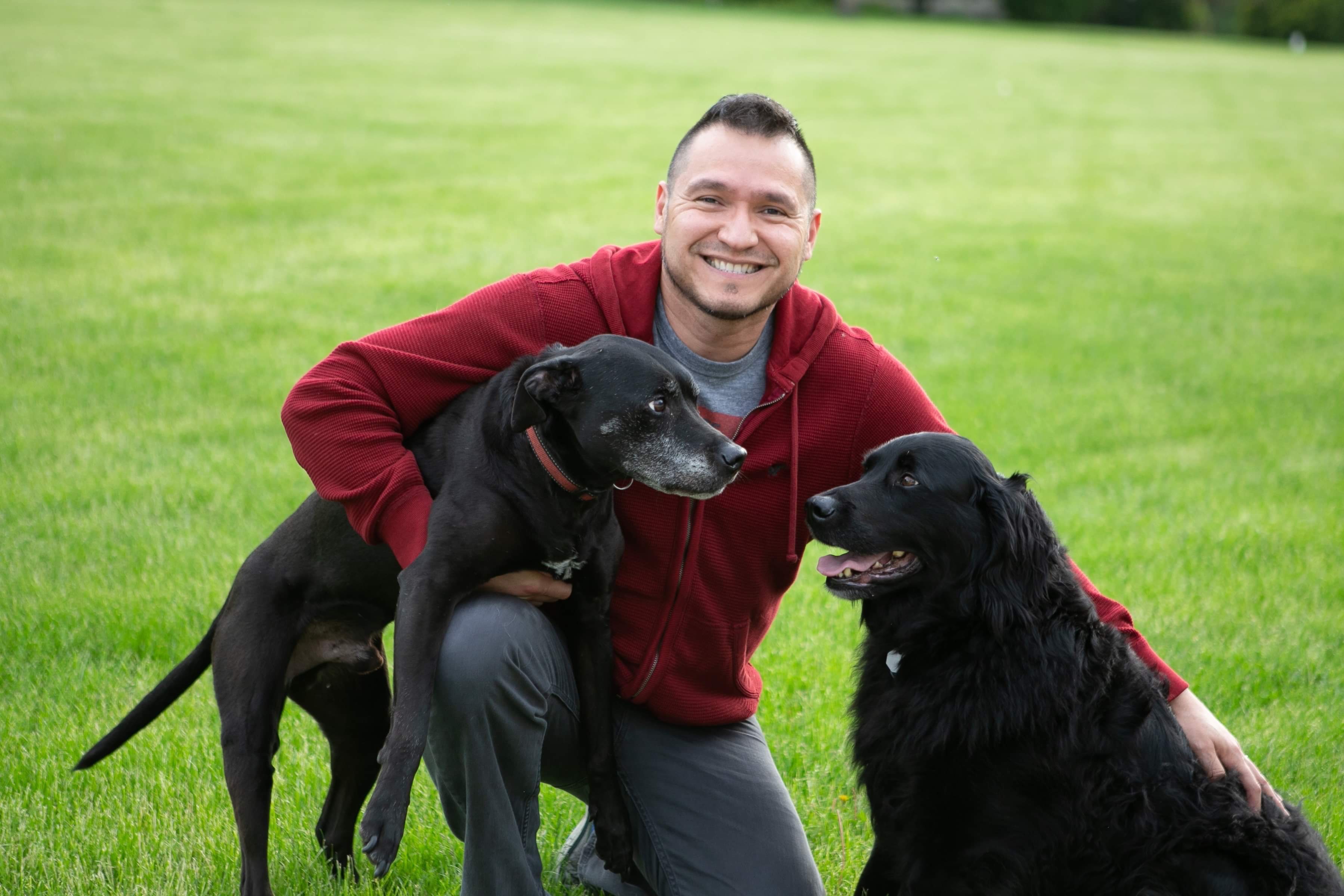
I'm a humanist. I believe in fairness, in access, and in the idea that good tools should be in everyone's hands. I have a dog. I drink a lot of coffee. I speak Spanish natively and English as an L2 speaker, which means I notice things monolingual speakers miss — and occasionally miss things they'd catch immediately.